where is Amelia?

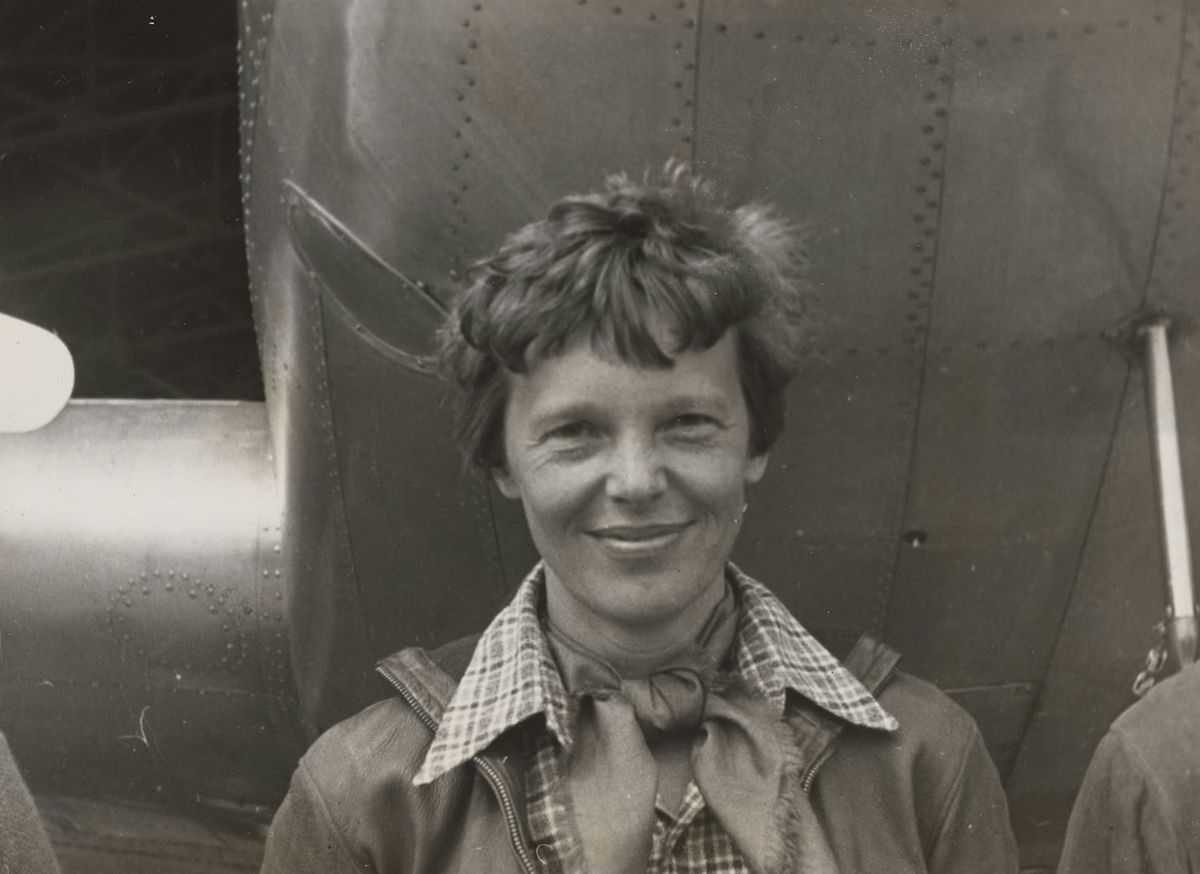
The beauty of a mystery is that it keeps us curious. For 89 years, one question has remained: Where did Amelia Earhart go?
I’ll admit. I was a little late to the story.
Earhart lost contact with the world in early July of 1937 while attempting to circumvent the globe — becoming the first female pilot to do so. Somewhere over the South Pacific, she disappeared. And then… nothing.
Of course, for many of us who were not exactly alive and well on Planet Earth in 1937, we didn’t discover the mystery until decades later. But as Purdue alumni, perhaps we have a little more reason to be curious. Earhart was an aeronautical advisor and lecturer at Purdue at the time of her disappearance. She prepared at and utilized the Purdue University Airport — the first college or university-owned airport in the United States. Purdue has honored her ever since, with a larger-than-life bronze statue, a dorm and more bearing her name.
So what if Purdue could help solve the mystery?
In the first week of October, a 17-person expedition team representing Purdue University and the Archaeological Legacy Institute departed from the Amelia Earhart Terminal in West Lafayette, Indiana, in search of the legendary “Lady Lindy” or “Queen of the Air.” And they think they may know where she disappeared.
The team flew for three days, traveling through Fiji before arriving in Kiribati on Tuesday, October 6. Then came the real journey.
On October 7, they began a five-day trek aboard the vessel Marin Mainiku, traveling multiple miles to the uninhabited coral atoll of Nikumaroro. Why Nikumaroro? A few notes about the island…
It’s a remote island, roughly 4.7 miles long and 1.6 miles wide — essentially a narrow ring of land surrounding a deep marine lagoon. It sits roughly 1,000 miles from Fiji and is home to thousands of coconut crabs, the largest land-living arthropod in the world, known for their massive size and incredible strength. They are omnivorous scavengers, meaning they eat people. (Note: multiple sarcastic, editorial comments were omitted here. :))
So, naturally, the expedition team had to get there. And they did — so far successfully avoiding the crabs. They are still there as of this posting. Hence, here is an update yesterday from Purdue:
- The 17-person expedition reached Nikumaroro on October 12 after a five-day, 830-nautical-mile voyage from Tarawa, Kiribati.
- They successfully went ashore on October 13, established their base, cleared trails, and reached the Taraia Peninsula, the area where the suspicious object lies in the lagoon.
- On October 14, they began the most important part of the investigation: an underwater survey of the “Taraia Object,” using a magnetometer and side-scan sonar.
- But severe weather has now interrupted the operation for three consecutive days. Rough seas and winds have made it unsafe to get from their ship to the island.
- The team says it needs at least two more days of fieldwork before it can identify the object with confidence. Because of the weather delay, they have decided to extend their stay rather than leave on the original schedule. The forecast for Sunday and Monday looks more favorable.
And now we get to the really interesting part.
What exactly is the Taraia Object? Could it actually be debris from Earhart’s Lockheed Electra 10-E? Could it be something completely unrelated? Know that there is considerable skepticism about exactly what this object is. Which is precisely why the team is there.
More then from Purdue:
- The Taraia Object is a strange feature in the shallow lagoon that was noticed in satellite imagery in 2020 and appears in older aerial imagery as well. The expedition is testing whether it could be the remains of Earhart's Lockheed Electra 10-E. They're planning to use a hydroprobeto to physically contact the object and determine its depth, orientation and surface composition, followed by a water-induction dredge to remove sediment and actually inspect what is there.
- And this is why the next couple of days could be significant: they're moving beyond sonar and imagery toward physically examining the object.
- Purdue has said that an update on the identification is expected once they've completed the necessary fieldwork.
So here we are. 89 years later. Could this be it? How exciting to watch it all unfold. Maybe our mystery will remain. Maybe, though, all will be solved. Curiosity is a beautiful thing.
Hopefully…
AR