I tried. Really. I tried.

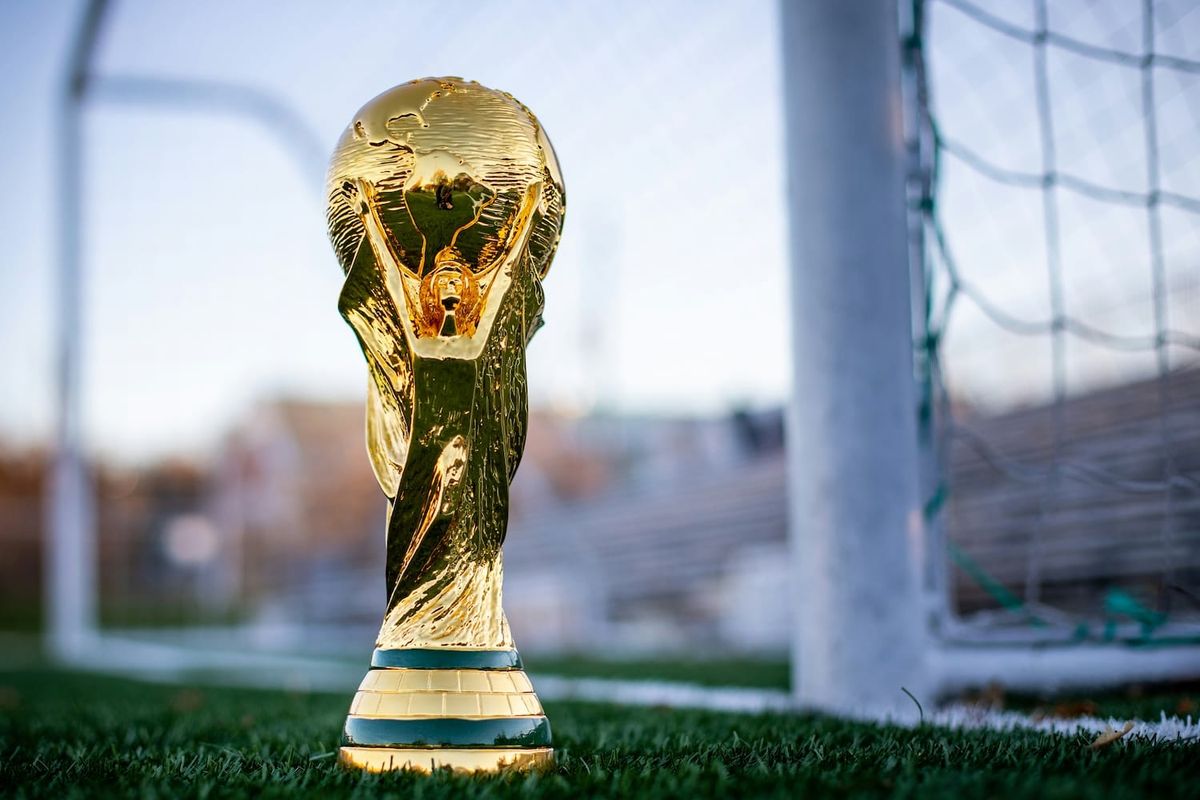
Summer is always the slowest stretch on the annual sports calendar. The NBA and NHL are complete. Baseball takes a while to watch. And the NFL continues to snooze until fall (only 14 days away, friends!).
So this summer, I had high hopes. With an estimated three-and-a-half to four billion fans worldwide, I thought I’d finally join them and become a legitimate soccer fan. It is, after all, the most popular sport on the planet.
To date, no less, my fandom has been inaccurately evident by donning the Inter Miami CF shirt often found in my dresser. To be clear, someone had to tell me what “CF” stood for, explain that Messi is the star, and remind me that the team is co-owned by former English footballer David Beckham. I mostly wear the shirt because it’s black with some keenly placed pink piping.
But this summer, with what is widely considered the biggest single sporting event in the world happening primarily in this time zone, I thought it was time. I would watch the World Cup. I would learn the game. I would finally become a bona fide fan.
Unlike the Olympics, where multiple events happen simultaneously and you can spend six hours watching sports you didn’t even know existed, the World Cup offers one match at a time. Simple. Manageable. We could do this.
And the popularity of the event is certainly not in question. In the U.S. alone, a record 217 million total viewers tuned in. Another 6,810,966 fans attended matches live in stadiums across the United States, Canada, and Mexico.
Forty-eight teams participated, playing a total of 104 matches over the course of the tournament. There were indeed some great matches…
There was the final, where Spain was crowned victor over defending champion Argentina, finally breaking the scoring drought with the game’s only goal in the 106th minute of extra time.
The bronze medal match was wild, with England defeating France in a game that apparently decided defense was entirely optional.
And there was the highly controversial match between U.S. vs. Bosnia and Herzegovina, in which leading American striker Folarin Balogun received a red card (that is accompanied by a one game suspension) on a rather routine play.
There were also teams that were simply fun to root for—from Cape Verde, the tournament’s undisputed underdogs who nearly defeated Argentina in an earlier round, to Norway, who upset Brazil and may have given the watching world some of the tournament’s best cheers, chants, and social media memes.
One would think I would finally be a fan.
But alas, there’s one thing about this sport—especially evident in men’s professional play—that kept soccer in precisely the same standing with me…
Soccer players lie.
We’ll say it another way.
Soccer players routinely fake and exaggerate injuries.
Why? Because they are attempting to manipulate the referees into awarding fouls and penalties against the other team.
And let us be clear: this is not simply my opinion. Arsène Wenger, the legendary former Arsenal manager, once explained: “The players are taught to be smart, and they are taught to find a little trick to make the opponent look guilty. It is part of the game now. It is part of the education of the young players.”
Danny Murphy, former Premier League midfielder, put it even more plainly: “I've been in dressing rooms where managers have said, ‘If you get a touch in the box, go down.’ It’s a fact. It’s part of the modern game, and it’s taught.”
In other words, the goal is not merely to win; the goal is to manipulate the people watching.
To make someone appear guilty when they may not be. To exaggerate what happened. To create a version of reality that causes the referee—and everyone else—to see something other than what is good, right, and true.
And that, friends, is where play, politics and people start to look a little too familiar. Manipulation is manipulation.
I’m not a fan of anyone who adopts said strategy—from the especially suave salesperson to politicians on any side of the aisle, to anyone who dramatizes their plight, distorts their opponent, or exaggerates the facts so that we will think like them and think worse of the alternatives. It’s manipulative. It’s deceitful. And, ultimately, it’s untrue.
Alas, with the fairness so fraught—in politics or in play—I remain not a fan.
Respectfully…
AR