not down with Downs
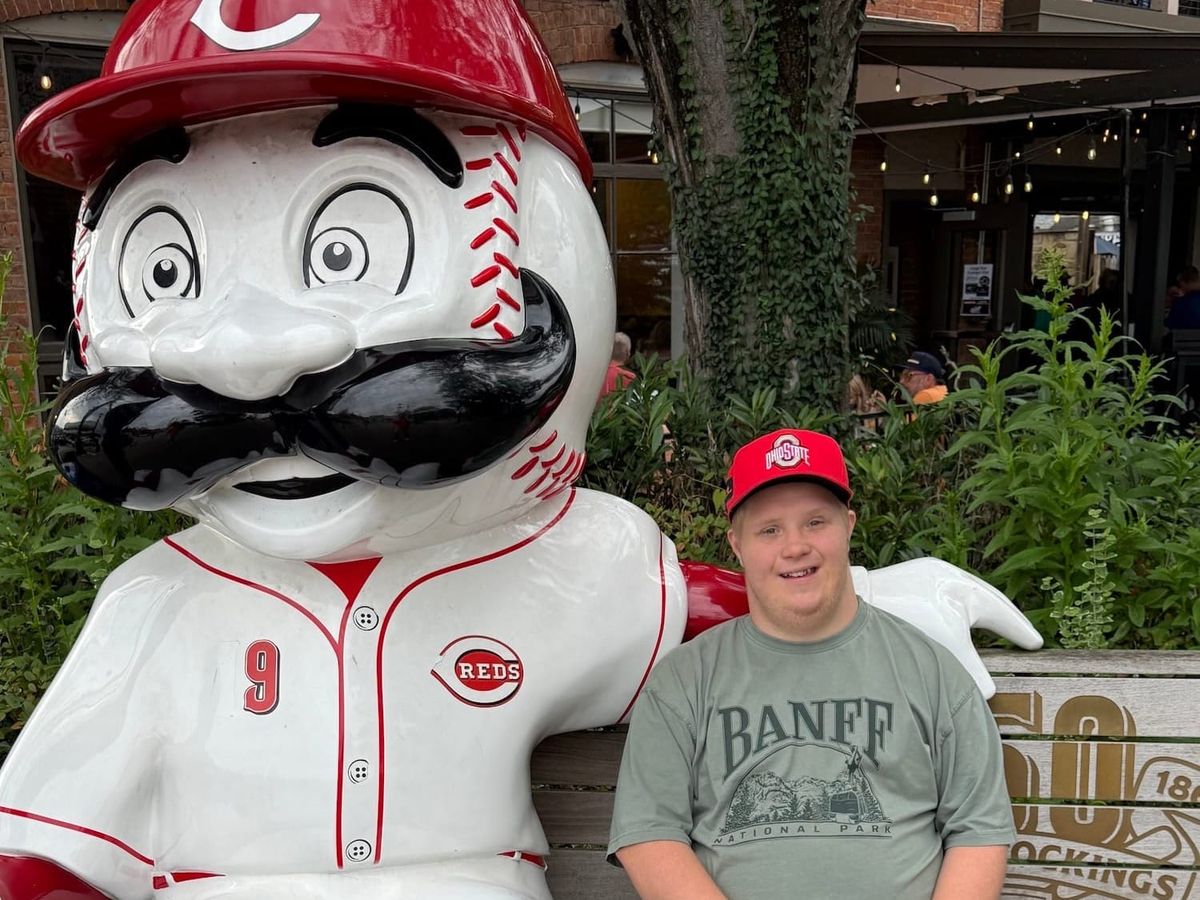
As has become a bit of a tradition, we end this year’s Guest Writer Series with keen insights from my favorite guest blogger. He is articulate and creative and really good with people. He likes college football, country music, and most all edible Mexican fare. He is my gifted son, Josh.
Josh is 24 — with 25 eagerly approaching. And for this year’s series, he wanted to sit down and have a frank conversation about what it means to have Down syndrome.
Let me be clear — and this is something Josh knows at the very core of his being: having Downs does not define Josh. It’s not his identity. He is defined as being God’s kid, created in His image, and thus learning to seek Him and find Him in all God has allowed him to walk through on this planet. Having Down syndrome is one piece of the journey God has allowed Josh to walk through. And Josh does it confidently, encouragingly and with nothing short of a tremendous, contagious joy.
Let me pause. He can speak on this better than me…
AR: “Hey, Josh. You ready for this?”
Josh: “Yeah, let’s go.”
AR: “Why did you want to do this?”
Josh: “Because I want to share this story. It’s life-changing.”
AR: “Life-changing can be positive or negative. How do you describe that for you?”
Josh: “For me it’s a little bit of both. It’s worth diving into.”
AR: “Tell us more.”
Josh: “I found a quote that’s healthy to start with. I like it because it’s what I’m trying to say that people don’t always talk about; they don’t always know it. ‘Down syndrome isn’t a burden. How people react to it is.’”
AR: “Oooh, that’s good, Josh. Let’s unpack that a little. First, what do you mean by a ‘burden’?”
Josh: “Something heavy to carry. A place of judgment. People look down on it, and it’s not right. It’s never right to look down on anybody.”
AR: “Why do you think people do that? Why do we sometimes look down on others?”
Josh: “I don’t know. It’s not just not understanding. They think of themselves as better. It’s not wise on their end.”
AR: “That’s helpful. So let’s go back to this idea that having Downs isn’t a burden; there’s no doubt you are thriving. But how people react to it is what’s typically hardest to carry. In addition to the judgment, how do you perceive people reacting to those of you with Downs?”
Josh: “Sometimes you get mistreated. Sometimes people think you can’t do stuff. You’re not always respected; that’s a problem to me.”
AR: “I think that’s great insight, Josh. And I think that’s important for all of us to hear. How could we all respect people with Downs more? What do you wish we would do — or not do?”
Josh: “I want people to think highly of me. Sometimes I need them to say it. I’m not a little kid. I want them to ask me questions about adult things or stuff adults talk about. I just want people to treat me like a friend they rely on. You can rely on me. I can’t do everything, but nobody can. That has nothing to do with Downs.”
AR: “That’s helpful. Before we started, you said you wanted to speak to other people who had Down syndrome. What do you want to say to them?”
Josh: “Come as you are. God made you the way you are. He made you good. He wants you to know Him. He wants you to be unashamed. He wants you to be unashamed to share your story and be who you are. You are brave. You are valuable. God loves you just the way you are.”
AR: “What else, Josh? What else for all people?”
Josh: “I know what it’s like to feel all that. That’s why I’m telling you my experience, my story. I want all people to feel unashamed and to know that there’s hope. And it’s real.”
AR: “Thanks, Josh. You rock. I think you’re awesome.”
(Josh smiles, chuckles, and nods away.)
Joyfully…
Josh